call-center
call-center
+31 6 28382471Shops in the Netherlands
Paradijsvogelstraat 14, 9713 BV Groningenno weekends
10:00 tot 20:00 uur
call-center
call-center
+31 6 28382471Shops in the Netherlands
Paradijsvogelstraat 14, 9713 BV Groningenno weekends
10:00 tot 20:00 uur
You chose 50 from 650
Price
Features
Brand
Frame size
Wheel diameter
Number of speeds
Pick up now In the shop Paradijsvogelstraat 14, 9713 BV Groningen

0 euro
0 euro
200 euro
test -drive
Pick up now In the shop Paradijsvogelstraat 14, 9713 BV Groningen

New


0 euro
0 euro
225 euro
test -drive
Pick up now In the shop Paradijsvogelstraat 14, 9713 BV Groningen


0 euro
0 euro
239 euro
test -drive
Pick up now In the shop Paradijsvogelstraat 14, 9713 BV Groningen


0 euro
-235 euro
235 euro
test -drive
Pick up now In the shop Paradijsvogelstraat 14, 9713 BV Groningen


0 euro
0 euro
379 euro
test -drive
Pick up now In the shop Paradijsvogelstraat 14, 9713 BV Groningen


579 euro
84 euro
495 euro
test -drive
Pick up now In the shop Paradijsvogelstraat 14, 9713 BV Groningen

New
0 euro
0 euro
3 300 euro


0 euro
0 euro
253 euro
0 euro
0 euro
253 euro


0 euro
0 euro
259 euro


0 euro
0 euro
267 euro


0 euro
0 euro
275 euro


0 euro
0 euro
285 euro
0 euro
0 euro
299 euro
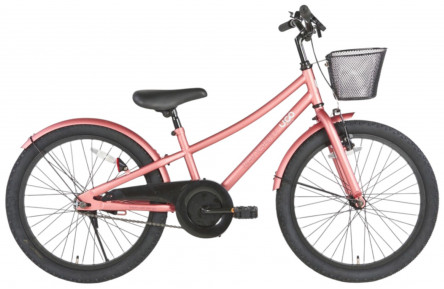
A 20-inch bike is a great choice for children who have become more confident cyclists and are ready for a larger, more stable bicycle for school, sports activities, and rides around the neighborhood. At FACEBIKE, you can easily find a suitable 20-inch bike that matches your child's height, cycling experience, and everyday routes.
A 20-inch bike is generally suitable for children approximately 6 to 8 years old. As a guideline, this wheel size is often recommended for children around 115 to 130 cm tall. However, age alone is not a reliable indicator. Some children are taller or shorter than their peers, while others have more cycling experience.
The most important thing is to check whether the child can mount the bicycle, stop safely, and reach the ground with their feet. When choosing a children's bike, confidence is more important than buying a larger size for future growth. A bicycle that is too large can feel difficult to control when braking, turning, or riding slowly.
For many children, a 20-inch bike marks the transition from a bicycle used mainly for practice to one used more regularly for everyday journeys. This includes cycling to school, visiting friends, going to sports clubs, or enjoying short family rides. The bicycle should therefore not only look appealing but also be sturdy, safe, and practical.
Compared to a 16-inch bike, a 20-inch model provides a smoother and more stable riding experience. Children can maintain their speed more easily and cycle longer distances without feeling that the bicycle is too small. At the same time, the bike remains compact enough for easy handling and control.
A 20-inch bike is often used for journeys of approximately 1 to 5 km. Reliability is particularly important for school routes: good brakes, visible reflectors, reliable lighting, and a luggage rack can make a significant difference. A kickstand is also convenient when the bicycle is parked at school or at home every day.
For school use, pay particular attention to the bicycle's weight and ease of operation. A children's bike that is too heavy is harder to steer and move around. Brake levers should be easy for small hands to reach. If the child has to squeeze very hard to apply the brakes, the bicycle is not ideal for safe everyday use.
Important features to check:
An enclosed chain guard is practical because it helps protect clothing from dirt and oil. This is especially useful for children who ride frequently, as it reduces problems with trouser legs, shoelaces, and chain grease.
Children often start cycling slightly longer distances on a 20-inch bike than on smaller models. That makes comfort more important than it is on a beginner's bicycle. The saddle should not be too hard, the handlebars should feel natural, and the riding position should remain relaxed.
A useful test is to let the child ride a short distance, then brake and turn. If they can do this smoothly without wobbling or stopping hesitantly, the bike is probably a good fit. If the child has to stretch forward to reach the handlebars or can barely touch the ground with their feet, the bicycle may be too large.
Buying a 20-inch bike becomes easier when you compare its size with other children's bicycles. The correct wheel size depends on the child's height, leg length, and cycling experience.
| Wheel Size | Recommended Age | Child's Height | Intended Use |
|---|---|---|---|
| 16 inch | 4–6 years | Approx. 105–120 cm | Learning to ride |
| 18 inch | 5–7 years | Approx. 110–125 cm | Short children's rides |
| 20 inch | 6–8 years | Approx. 115–130 cm | School and everyday use |
| 22 inch | 7–9 years | Approx. 125–140 cm | Longer children's rides |
This table is a general guideline. If your child falls between two sizes, do not automatically choose the larger option. A bicycle that is easy to control today is safer than one that will only become comfortable to ride in a year's time.
Follow these steps when choosing a bicycle:
After that, you can consider color, style, baskets, and other details. These features make the bicycle more enjoyable, but proper fit and safety should always come first.
At FACEBIKE, bicycles are conveniently organized by type and wheel size. This allows you to quickly find models suitable for your child's age and height. If you are specifically looking for 20-inch bikes, you do not need to browse through smaller children's bicycles or adult models first.
This clear organization makes comparing bicycles easier. You can quickly identify which models are suitable for school, everyday journeys, and safe cycling around the neighborhood.
FACEBIKE focuses on bicycles designed for practical everyday situations. For children's bikes, this means paying attention to stability, comfort, braking performance, and ease of operation. A bicycle should not only look attractive but, more importantly, be safe and enjoyable to ride.
This matters to parents because a properly fitted bicycle is more likely to be used regularly. When a child can mount the bike easily, brake effectively, and ride with confidence, school journeys and family cycling trips become much more relaxed.
A 20-inch bike is a practical choice for children who are outgrowing smaller bicycles and are ready for more independent rides. This wheel size offers a good combination of stability, control, and comfort for everyday use.
Explore the selection at FACEBIKE and choose a 20-inch bike that matches your child's height, experience, and cycling needs. This will help you find a practical children's bicycle for school, sports activities, neighborhood rides, and enjoyable family cycling trips.

We will contact you soon :)
Our working hours are mon-Sun: 11:00-20:00
-
-
- euro
- - euro
- euro
Дякую за підписку
We will contact you soon :)
Our working hours are
mon-Sun: 11:00-20:00