
call-center
call-center
+31 6 28382471Shops in the Netherlands
Paradijsvogelstraat 14, 9713 BV Groningenno weekends
10:00 tot 20:00 uur
call-center
call-center
+31 6 28382471Shops in the Netherlands
Paradijsvogelstraat 14, 9713 BV Groningenno weekends
10:00 tot 20:00 uur

New
Used
12"
14"
16"
18"
20"
22"
24"
26"
27.5"
No amortization
to 200 euro
200 - 400 euro
You chose 8 from 66
Price
Features
Wheel diameter
test -drive
Pick up now In the shop Paradijsvogelstraat 14, 9713 BV Groningen


0 euro
0 euro
259 euro
used
test -drive
Pick up now In the shop Paradijsvogelstraat 14, 9713 BV Groningen

0 euro
0 euro
129 euro


209 euro
10 euro
199 euro


219 euro
11 euro
208 euro


0 euro
0 euro
239.95 euro

0 euro
0 euro
262.49 euro


0 euro
0 euro
269.95 euro
0 euro
0 euro
289 euro
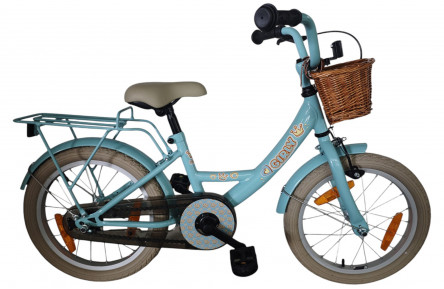
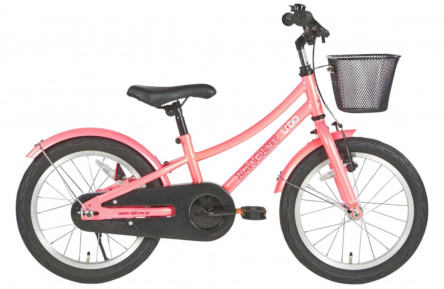
A 16 inch girls' bike is often the first bicycle on which a child learns to start riding, brake, and take short rides independently without assistance. At FACEBIKE, you can choose a suitable model for children who are practicing on their street, cycling to the playground, or joining short family bike rides.
A 16 inch girls' bike is generally suitable for children aged 4 to 6 years, with a height of approximately 105 to 120 cm. However, children of the same age may fit differently on a bicycle due to differences in leg length, balance, and experience with a balance bike.
That's why you should always have your child get on and off the bicycle independently. The handlebars should be within comfortable reach without requiring fully extended arms. When stopping, the child should be able to quickly place their feet on the ground for support. This provides greater confidence when stopping unexpectedly or losing balance.
For young children, a heavy frame is often more difficult to handle than parents expect. A lightweight girls' bike is easier to turn on the sidewalk, place on its kickstand, and lift upright after a minor fall. This makes learning to ride less frustrating.
Also, pay attention to the height of the top tube and how easy it is to get on the bike. A low step-through frame is practical when a child frequently gets off the bicycle or needs to adjust their position. This isn't a minor detail: the faster a child can get off the bike safely, the more confidently and calmly they can learn to ride.
A properly adjusted saddle makes a big difference. If it's too high, starting to ride can feel intimidating because the child struggles to reach the ground for support. If it's too low, the child pedals with excessively bent knees and becomes tired more quickly.
A good starting point is to adjust the saddle so that the child's leg is almost fully extended when the pedal is at its lowest position. At the same time, they should be able to quickly put a foot on the ground when stopping. Check the adjustment again after a few months, as children can grow rapidly at this stage.
A 16 inch girls' bike may have a coaster brake, a hand brake, or a combination of both. A coaster brake feels intuitive to many beginner cyclists, while a hand brake helps prepare children for the transition to a larger bicycle.
More important than the type of braking system is whether the child understands how to stop. Start practicing in a quiet playground or on a wide sidewalk. Have your child ride slowly several times and brake before an imaginary line. This helps them learn to stop without the pressure of traffic or other cyclists.
| What to Check Before Buying | Why It Matters | How to Test It |
|---|---|---|
| Handlebar reach | Prevents a tense riding position | Have your child steer independently |
| Brakes | Essential for stopping safely | Have your child test both brakes |
| Weight | Determines how easy the bike is to handle | Ask your child to turn the bicycle around |
| Pedals | Provide grip in wet or sandy conditions | Check for a non-slip surface |
| Chain guard | Protects clothing and shoelaces | Check that the chain is properly covered |
For short rides, practical details are often more valuable than additional accessories. A fully enclosed chain guard helps prevent loose shoelaces, trouser legs, or jackets from getting caught in the chain. Mudguards are useful when riding through puddles or over wet pavement, helping to prevent wet backs and dirty shoes.
A bicycle bell is also useful. It teaches children to alert pedestrians or other cyclists in good time. This is safer than suddenly swerving or shouting loudly.
Training wheels can be helpful when a child has very little sense of balance. However, they should primarily be used as temporary support. Children only truly learn to adjust their balance when they begin maintaining it independently while turning.
If your child already has plenty of experience with a balance bike, practicing without training wheels on a flat surface may work well. Start with short sessions of 10 to 15 minutes. Fatigue reduces a child's ability to react properly and can lead to frustration more quickly.
A playground, empty parking lot, or wide cycle path without traffic is better than practicing immediately on a busy street. Choose a location without loose gravel, sharp curbs, or large numbers of pedestrians.
Start by practicing three simple skills:
Once your child can perform these skills confidently, you can take a short ride together around the neighborhood. This allows their confidence to grow step by step.
At FACEBIKE, you can browse girls' bikes by wheel size, allowing you to compare relevant 16 inch models directly. This makes it easier to focus on the features that really matter for a child's first bicycle: low weight, reliable brakes, a comfortable riding position, and practical protection for the chain and clothing.
A 16 inch girls' bike should not only look attractive but, above all, help a child learn to cycle independently with confidence. Choose a model that fits properly now and provides a safe, enjoyable experience during those important first rides.

We will contact you soon :)
Our working hours are mon-Sun: 11:00-20:00
-
-
- euro
- - euro
- euro
Дякую за підписку
We will contact you soon :)
Our working hours are
mon-Sun: 11:00-20:00


