
call-center
call-center
+31 6 28382471Shops in the Netherlands
Paradijsvogelstraat 14, 9713 BV Groningenno weekends
10:00 tot 20:00 uur
call-center
call-center
+31 6 28382471Shops in the Netherlands
Paradijsvogelstraat 14, 9713 BV Groningenno weekends
10:00 tot 20:00 uur

New
Used
12"
14"
16"
18"
20"
22"
24"
26"
27.5"
No amortization
to 200 euro
200 - 400 euro
400 - 600 euro
600 - 1 000 euro
You chose 18 from 66
Price
Features
Brand
Frame size
Wheel diameter
test -drive
Pick up now In the shop Paradijsvogelstraat 14, 9713 BV Groningen


0 euro
0 euro
329 euro
test -drive
Pick up now In the shop Paradijsvogelstraat 14, 9713 BV Groningen


0 euro
0 euro
429 euro
test -drive
Pick up now In the shop Paradijsvogelstraat 14, 9713 BV Groningen

599 euro
42 euro
557 euro
used
test -drive
Pick up now In the shop Paradijsvogelstraat 14, 9713 BV Groningen

0 euro
0 euro
195 euro
used
test -drive
Pick up now In the shop Paradijsvogelstraat 14, 9713 BV Groningen

0 euro
0 euro
195 euro
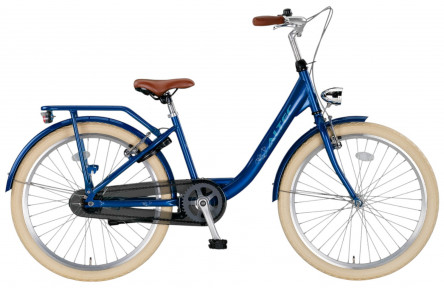


0 euro
0 euro
249 euro


0 euro
0 euro
325 euro
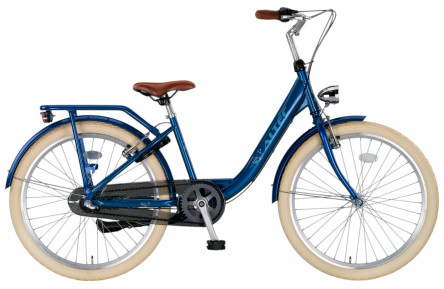


0 euro
0 euro
329 euro


0 euro
0 euro
389 euro


0 euro
0 euro
499.95 euro

0 euro
0 euro
499.95 euro


0 euro
0 euro
499.95 euro


0 euro
0 euro
499.95 euro


0 euro
0 euro
499.95 euro
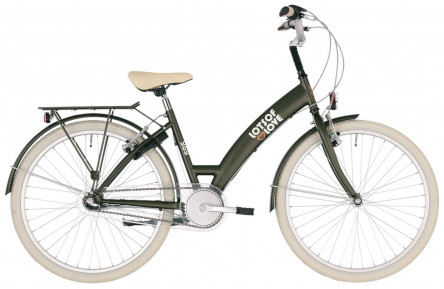


0 euro
-515 euro
515 euro
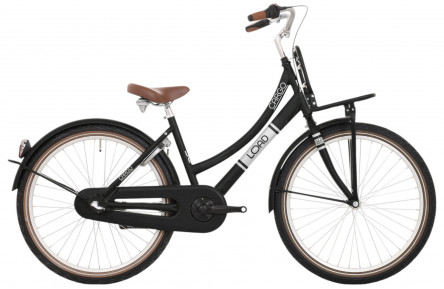
0 euro
0 euro
530 euro


0 euro
-595 euro
595 euro
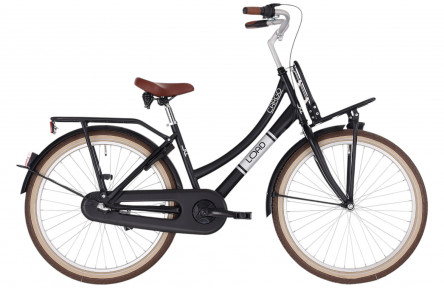
A 24 inch girls' bike is a suitable choice for children who are becoming more independent and regularly cycle to school, sports activities, or friends' houses. It provides greater comfort than a smaller bicycle. At FACEBIKE, you can choose a model that suits your child's height, daily routes, and the belongings they need to carry.
A 24 inch girls' bike is generally suitable for children aged 8 to 11 years, with a height of approximately 130 to 145 cm. However, these figures are only a starting point. At this age, children of the same height may still need different frame sizes due to differences in leg length and riding position.
That's why you shouldn't simply have your child sit on the bicycle while it's stationary. Ask her to start riding independently, make a sharp turn, brake gently, and put the bike on its kickstand. If she can perform these actions without assistance, the bicycle is much more likely to remain comfortable and manageable at school, in a crowded bike rack, or during an unexpected stop.
Buying a larger bicycle "to grow into" may seem practical, but it can actually reduce control. When the saddle is too high or the handlebars are too far away, getting on the bike becomes more difficult, and braking at low speeds feels less secure.
With a 24 inch model, a proper riding position is more important than maximum room for growth. The saddle and handlebars can still be adjusted, but a frame that's too large or too long will remain less practical. A bicycle that fits properly now provides greater confidence in traffic.
At this size, a bicycle is often used every day. A schoolbag containing books, drinks, and sports clothes can easily weigh 4 to 7 kg. Carrying it on the back is possible, but it becomes more tiring on longer rides, over bumps, or in strong winds.
That's why a luggage rack is an important feature. Check not only whether the bicycle has a rack but also whether a bag can be securely attached using elastic straps or a bicycle bag. A loose bag on the rear rack can shift during a turn or hang dangerously close to the spokes.
For rides during autumn and winter, mudguards, lights, and tires with sufficient grip are essential rather than optional extras. Mudguards won't keep everything completely dry, but they reduce water splashing onto the back, jacket, and shoes. This makes cycling to school after rain much more comfortable.
Also, check whether your child can operate the lights independently. A light switch that's difficult to reach is more likely to be forgotten. For a bicycle regularly used at dusk, it's more practical to have front and rear lights that are easy to switch on.
| Question Before Buying | Practical Recommendation | Why It Matters |
|---|---|---|
| Does your child often carry a bag? | Choose a sturdy luggage rack | Better balance and less pressure on the shoulders |
| Is the route often wet or muddy? | Choose mudguards and tires with a light tread pattern | Less dirt and better grip |
| Will the bicycle be parked at school? | Check the kickstand and locking options | Easier and more secure parking |
| Are there many intersections? | Choose brakes with good modulation | Greater control during sudden stops |
| Does your child cycle during winter? | Look for lights that are easy to operate independently | Better visibility at dusk |
Children can grow significantly in a short period. A saddle that was properly adjusted a few months ago may suddenly be too low. When the saddle is too low, your child pedals with excessively bent knees, making longer rides more tiring.
If the saddle is too high, stopping becomes more difficult. A good starting point is to adjust it so that the child's leg is almost fully extended at the bottom of the pedal stroke while still allowing her to quickly find support when stopping. Check this adjustment especially after a growth spurt.
A 24 inch girls' bike can reach considerable speeds, especially on a flat cycle path. That's why the brake levers should be easy to operate without requiring excessive grip strength. Have your child test both brakes and check whether the bicycle remains stable during a firm stop.
For regular city riding, extremely aggressive tire treads are usually unnecessary. They provide plenty of grip but increase rolling resistance on asphalt. Tires with a light tread pattern are often more practical for cobblestone streets, wet cycle paths, and sidewalks, offering sufficient traction without making pedaling unnecessarily difficult.
This helps prevent an attractive bicycle from turning out to be less practical in everyday use. A basket or beautiful color may increase motivation, but comfort, reliable brakes, and a proper riding position determine whether the bicycle will be used every day.
At FACEBIKE, you can browse girls' bikes by wheel size and compare models based on the features that really matter for everyday use. These include luggage racks, brakes, frame design, lighting, and comfort on school routes.
A 24 inch girls' bike is often the bicycle that allows a child to travel more independently. Choose a model that suits her current height, everyday routes, and the confidence she needs to develop while cycling.

We will contact you soon :)
Our working hours are mon-Sun: 11:00-20:00
-
-
- euro
- - euro
- euro
Дякую за підписку
We will contact you soon :)
Our working hours are
mon-Sun: 11:00-20:00


